01 // The pattern
It started in Texas.
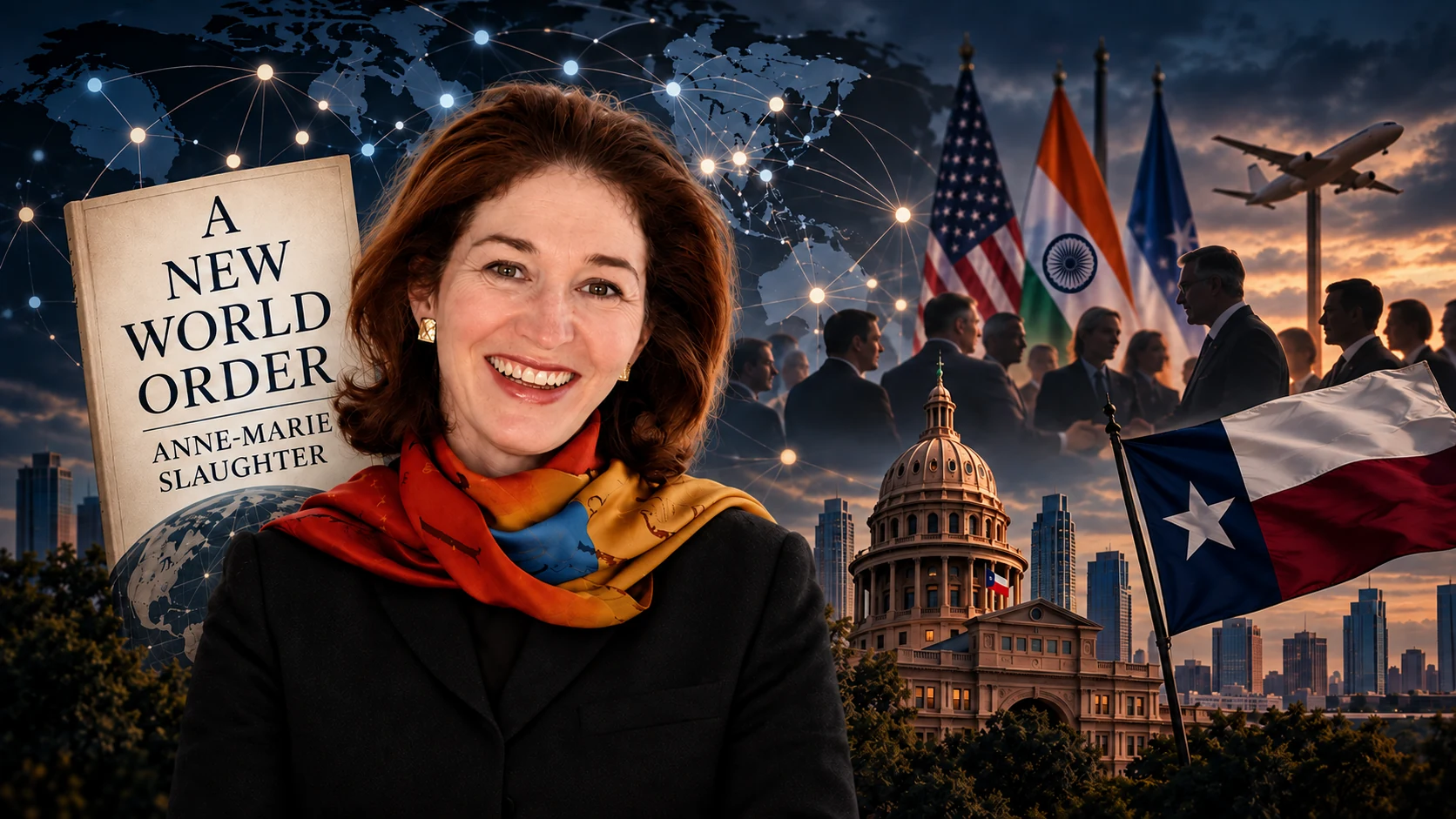
Texans have watched North Texas change quickly. Across Richardson, Plano, Frisco and Irving, Indian businesses, technology companies, temples, professional networks and university ties have become much more visible. So we started with a simple question: why did this happen so fast?
That question led to Governor Greg Abbott’s India missions.
Then Montana Governor Greg Gianforte announced nearly the same kind of trip — businesses, universities, critical minerals, manufacturing, quantum, photonics and bioscience.
Different state. Same structure.
So we traced it backward.
02 // The theory
Then we found Anne-Marie Slaughter.
In 2004, Slaughter published a book about an emerging system of international governance built around networks of government officials operating across borders.
The title was A New World Order.
Yes, really.
That wording is not being imposed on her by critics. Princeton’s own description of the book said Slaughter believed a “new world order” based on government networks was already emerging and argued that it was time to support the practice of global governance.
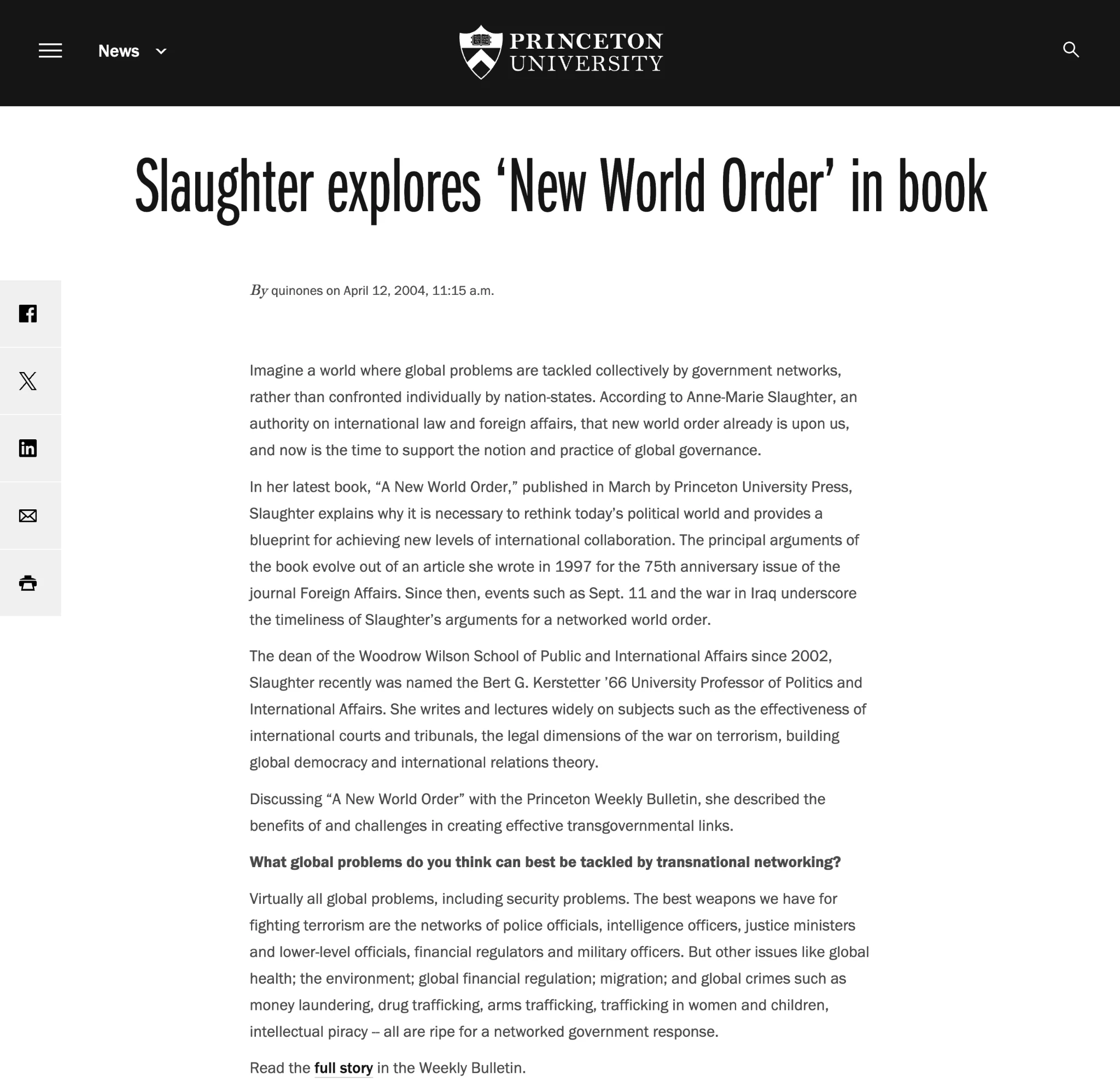
Slaughter’s model was not one centralized world government. It was more subtle. She argued that governments could be broken into their individual parts — regulators, courts, agencies and other institutions — which could then work directly with counterparts across national borders.
National governments would remain, but more governance could occur through the networks connecting their internal pieces. Her own academic work used phrases including “global government networks,” “disaggregated sovereignty,” and “disaggregated democracy.”
Five years after A New World Order was published, Slaughter entered Hillary Clinton’s State Department as Director of Policy Planning. The State Department’s Office of the Historian records her entry on duty on January 23, 2009, and service through January 23, 2011.
An archived State Department biography is an especially useful receipt: on the same official page, it identifies Slaughter as the Department’s Director of Policy Planning from 2009–2011 and lists A New World Order among her books.
03 // The operator
Then came Reta Jo Lewis.
Clinton’s State Department began pushing 21st Century Statecraft, expanding diplomacy beyond the traditional model of Washington talking to foreign capitals and into businesses, universities, technology, civil society and subnational governments.
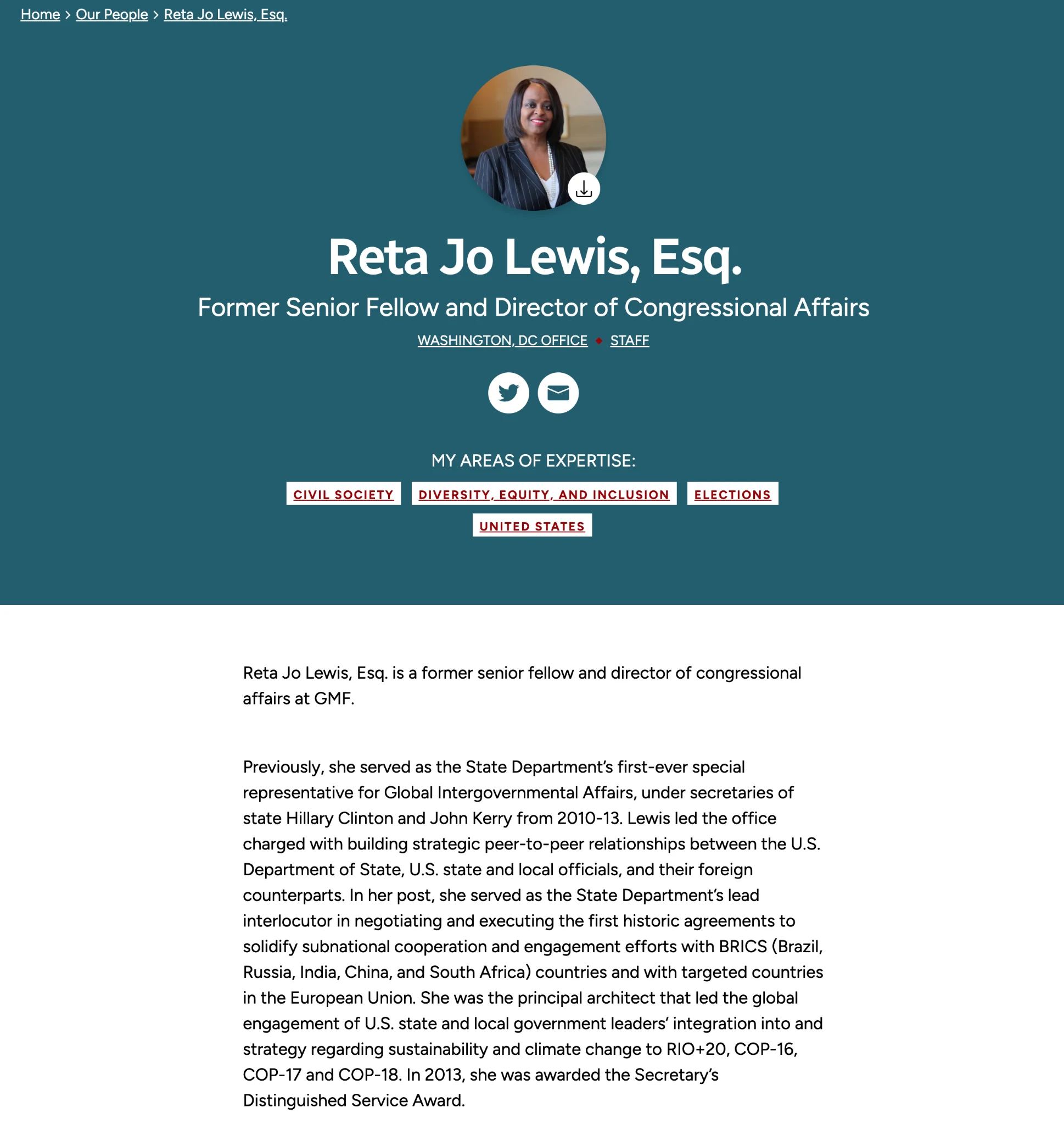
Reta Jo Lewis became the State Department’s Special Representative for Global Intergovernmental Affairs. Her job was to build strategic relationships between U.S. state and local officials and foreign counterparts.
And this was much bigger than India.
Lewis’ later German Marshall Fund biography says she served as the State Department’s lead interlocutor in negotiating and executing the first historic agreements designed to solidify subnational cooperation with the BRICS countries — Brazil, Russia, India, China and South Africa — as well as selected European countries.
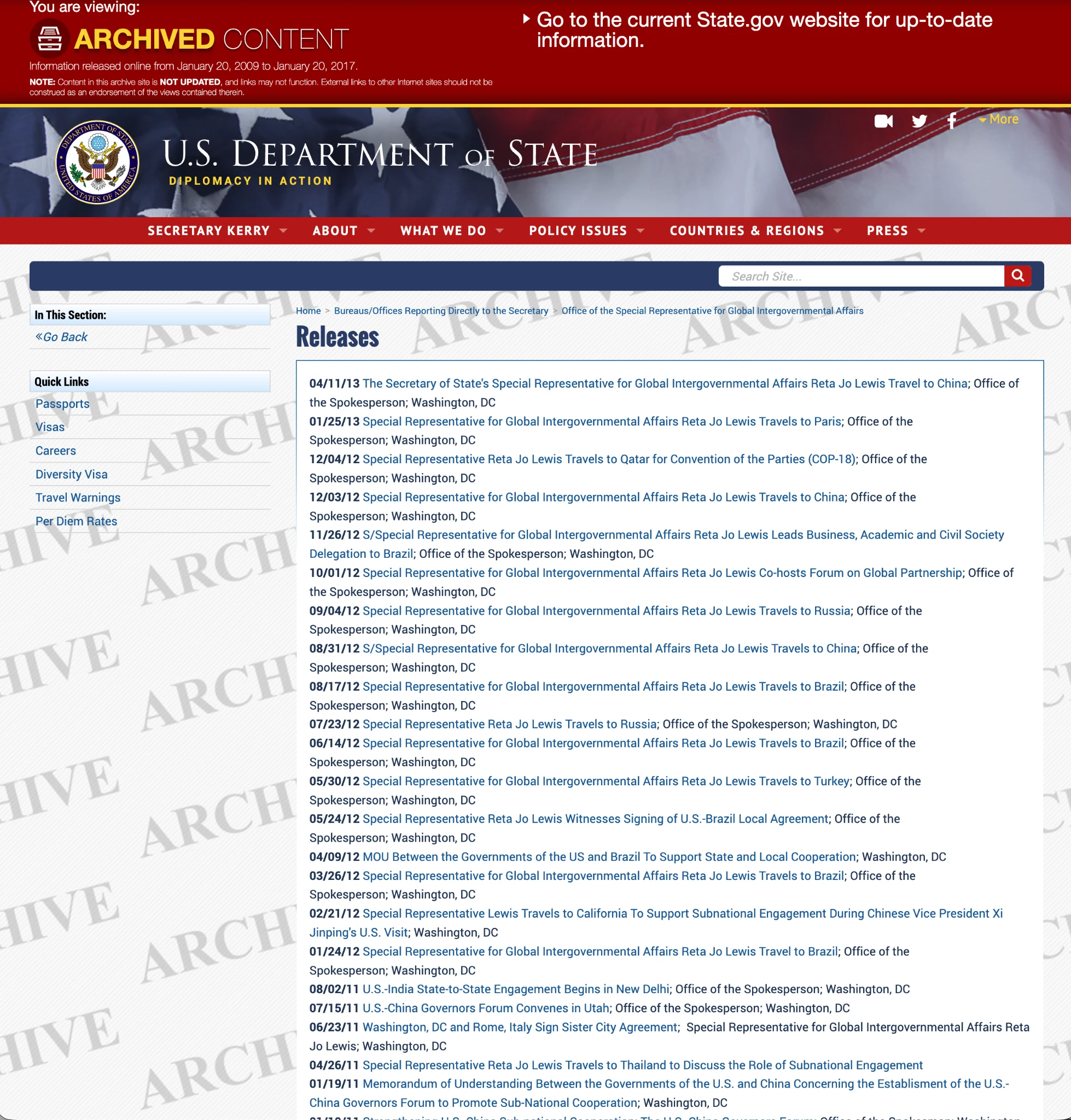
In January 2011, Hillary Clinton and Chinese Foreign Minister Yang Jiechi established the U.S.-China Governors Forum to Promote Sub-National Cooperation. Brazil followed with formal state and local cooperation agreements.
And then there was India.
On August 2, 2011, the State Department recorded: “U.S.-India State-to-State Engagement Begins in New Delhi.” Lewis traveled throughout India promoting relationships among government, business and academia around trade, infrastructure, education, science, technology and investment.
Related institutional context: the German Marshall Fund page where Lewis’ biography appears also featured this video on YouTube ↗.
04 // 2011
The year the rails met.
Now look at what else happened in 2011.
On June 15, President Barack Obama signed Executive Order 13577, creating SelectUSA inside the Department of Commerce.
The order said the United States faced growing global competition for investment and needed a federal system to help win it. SelectUSA would support business investment and help investors connect with American state and local economic-development organizations.
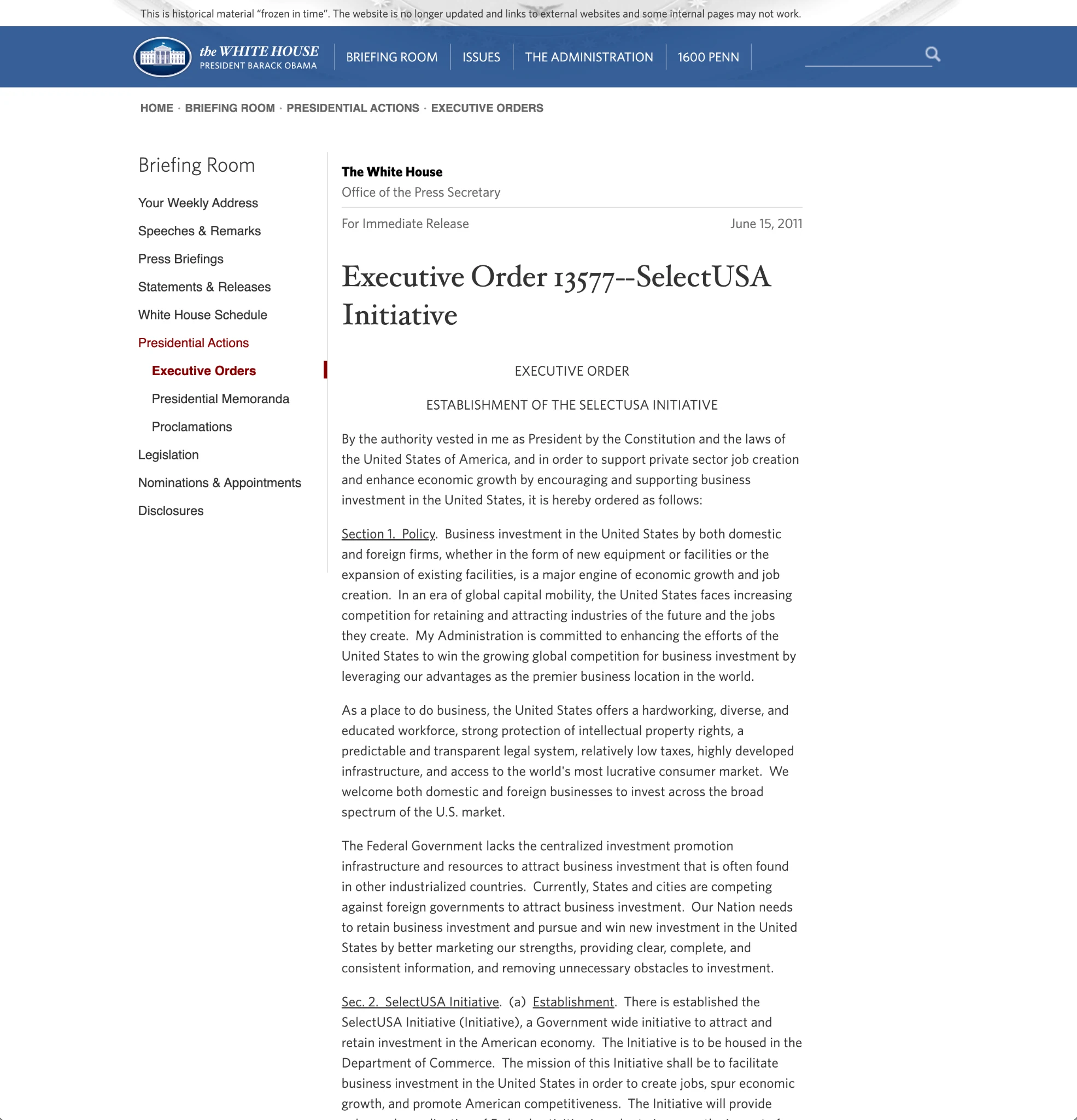
By the summer of 2011, several pieces were operating at once. Clinton’s State Department was building subnational diplomacy. Lewis was connecting American states and cities with counterparts across BRICS countries. Obama had created a federal rail for directing global investment toward American communities. And the State Department was explicitly launching U.S.-India state-to-state engagement.
We have not found a document saying all of these pieces were one centrally scripted master plan.
But the machinery fits together remarkably well.
One side builds relationships. Another attracts capital. Governors recruit. Economic-development organizations facilitate. Universities establish research and talent relationships. Chambers create business connections. Cities build soft-landing infrastructure. Companies establish operations.
And eventually what began as foreign policy becomes a local reality.
05 // Continuity
The machinery survived the administration.
Under Biden, the State Department created a new Subnational Diplomacy Unit. In 2024, it launched something literally called the State-to-States Initiative.
The State Department described its representative as a connector between American towns, cities, counties and states and the foreign-policy apparatus. The initiative engaged local officials, diaspora communities, nonprofits and academic institutions while tying international relationships to jobs, investment and local engagement.
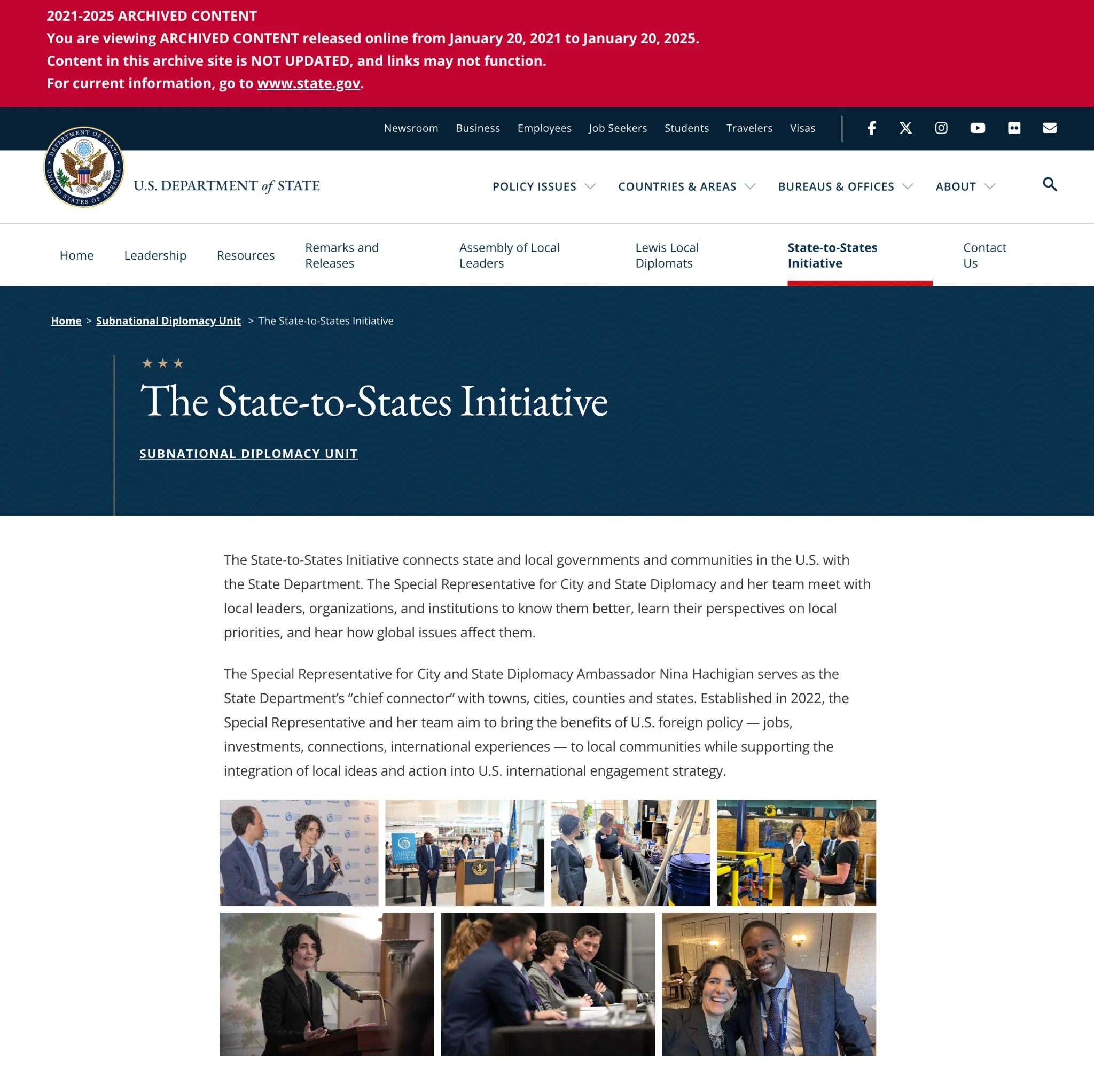
Under Trump, meanwhile, the foreign-investment side of the machinery has continued. Different administrations can reject one another’s ideology while discovering that the same institutional rails are useful for their own goals.
That may be the biggest finding.
The network outlived the people who built it.
06 // The local effect
Then the network becomes a place.
That brings the investigation back to Texas.
An Indian company does not simply appear in Richardson. There is infrastructure behind the landing. Federal programs make introductions. Governors recruit. State and local economic-development groups facilitate. Universities form partnerships. Cities create landing programs. Businesses establish permanent operations.
North Texas did not change because one person made one decision. It changed through thousands of decisions spread across federal agencies, governors, cities, universities, economic-development organizations, corporations and foreign partners.
Each decision can look small when viewed alone. Together, they can transform a place.
The network was not hidden. The programs had names. The offices had names. The people involved publicly explained what they were building.
Most Americans simply never saw all of the pieces on the same page.
Important boundary: the records gathered here do not establish a centrally scripted plan to change Texas’ demographics, nor do they make immigrant communities responsible for policy decisions. They establish the institutional architecture that encouraged international investment, subnational partnerships and local development. The consequences of that architecture should be measured separately from the intentions attributed to it.
07 // Receipts
Open the source layer.
The source layer remains attached so the institutional genealogy can be checked against the public record.