What the Vatican actually is
To understand the pope as a power node, four things have to be separated: the Catholic Church, the Holy See, Vatican City State, and the pope himself.
Catholic Church
The worldwide religious institution: dioceses, clergy, religious orders, schools, charities, hospitals and missions.
Holy See
The central authority through which the pope governs the universal Church and conducts diplomatic relations.
Vatican City
The independent territorial state created to protect the Holy See from subordination to another national government.
The Pope
Bishop of Rome, supreme authority of the Catholic Church, and sovereign of Vatican City State.
The tiny country is not the real scale of the system. Its sovereignty protects the independence of a transnational governing structure.
How Robert Prevost reached the center
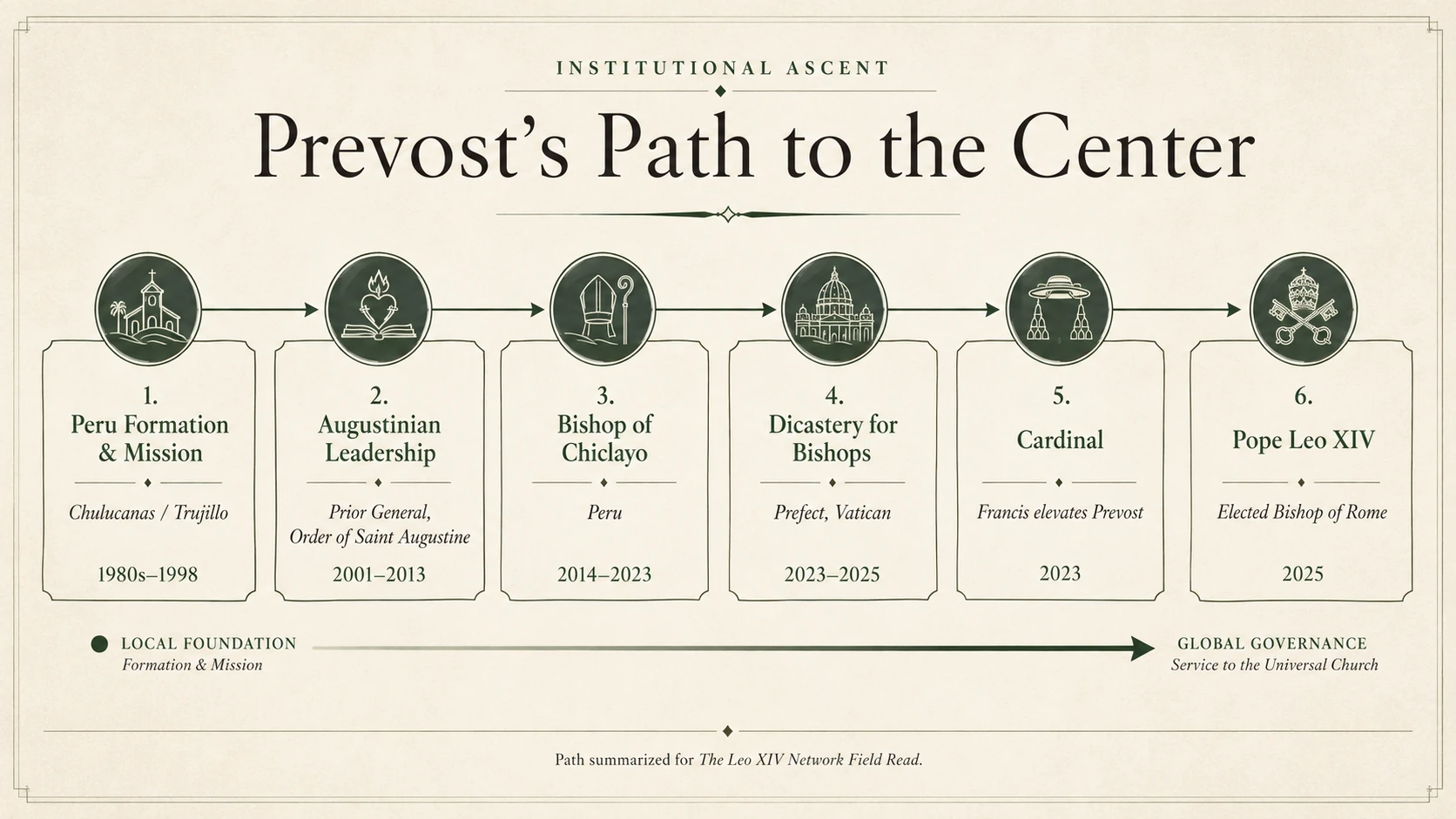
Prevost spent years in Peru as a missionary, canon lawyer, seminary professor and formation director. This is where the first identifiable leadership alumni emerge.
He governed the worldwide Order of Saint Augustine for two consecutive six-year terms, building relationships across provinces and missions on multiple continents.
Francis sent Prevost back into episcopal leadership in Peru, culminating in his role as Bishop of Chiclayo.
Francis brought Prevost to Rome and placed him over one of the Church’s most consequential personnel rails: the machinery that evaluates and recommends future bishops.
Prevost entered the College of Cardinals while simultaneously being cross-appointed into multiple Curial bodies.
The conclave converged rapidly on a candidate who already bridged Latin America, the Augustinians, Rome, bishops and multiple Curial systems.
The network is layered
The people formed before the papacy
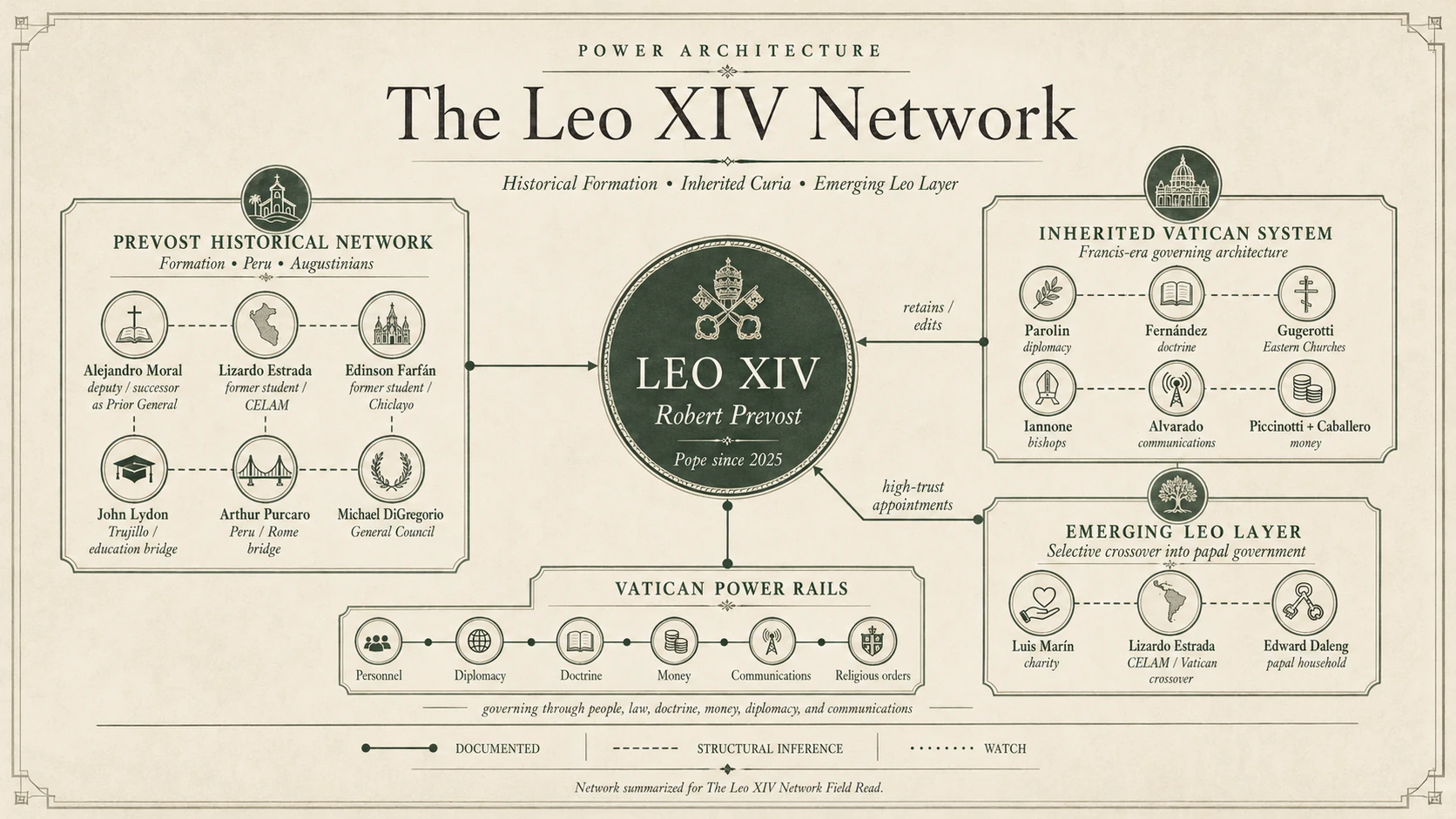
The strongest historical layer is a formation-and-governance network: students, deputies, provincial leaders, missionaries and collaborators inside systems Prevost led.
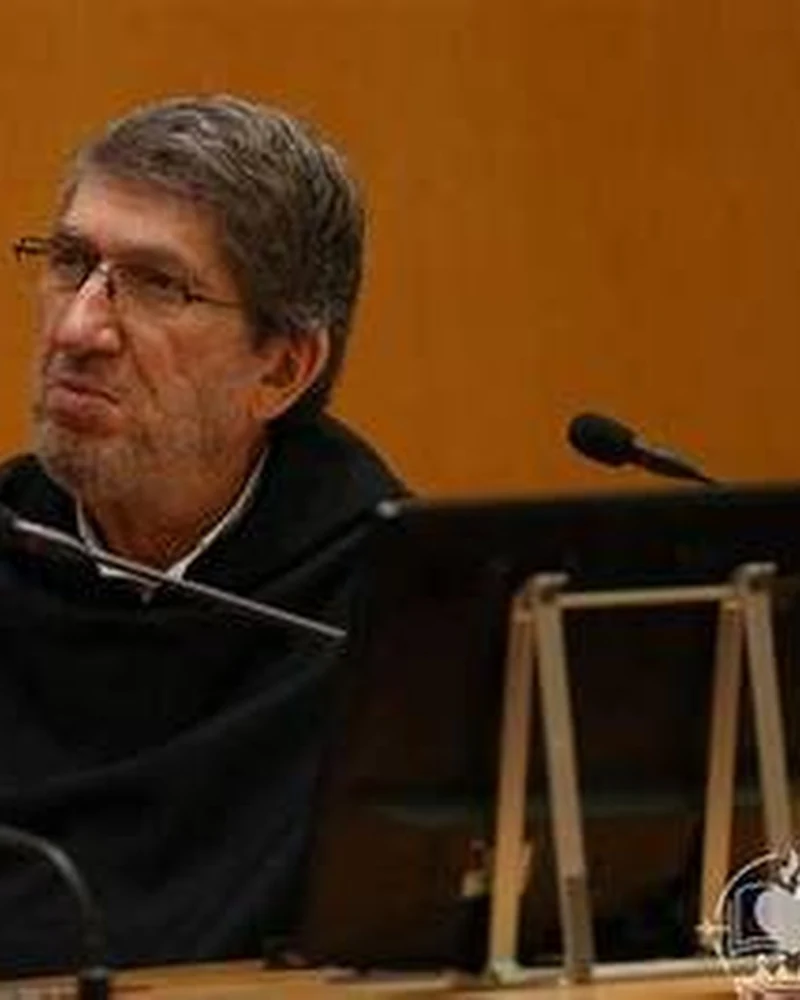
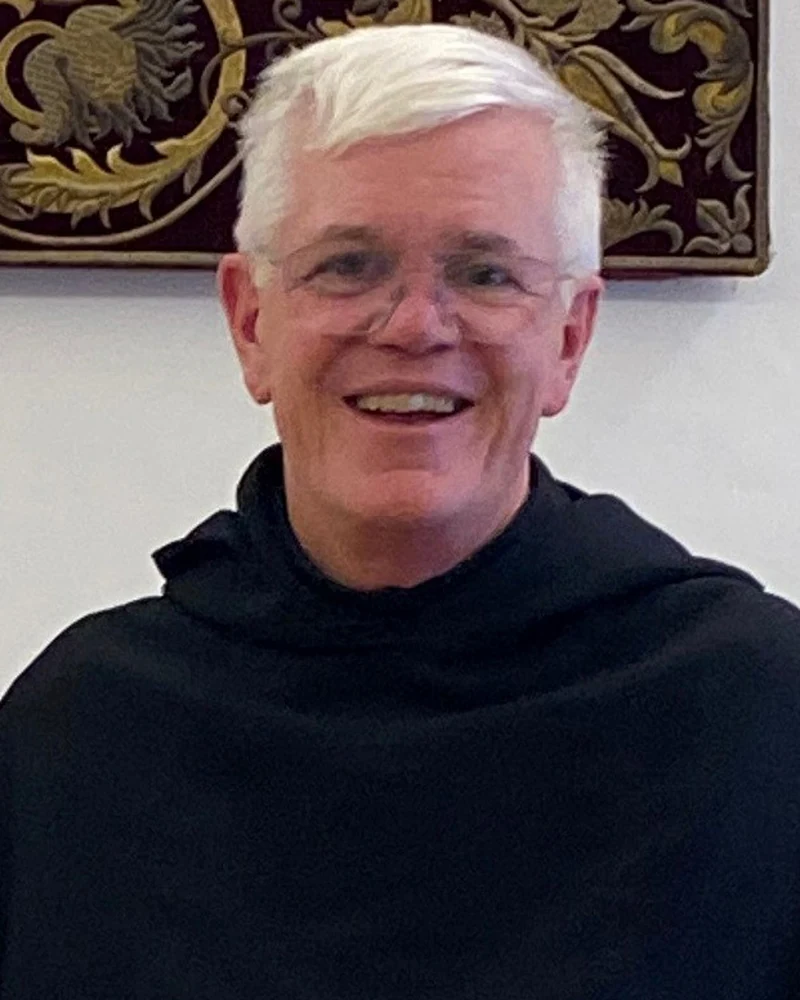
Alejandro Moral Antón, O.S.A.
Longtime Augustinian colleague · successor as Prior General
Worked in the Order’s governing structure around Prevost and then succeeded him as Prior General from 2013–2025, creating a long line of institutional continuity.
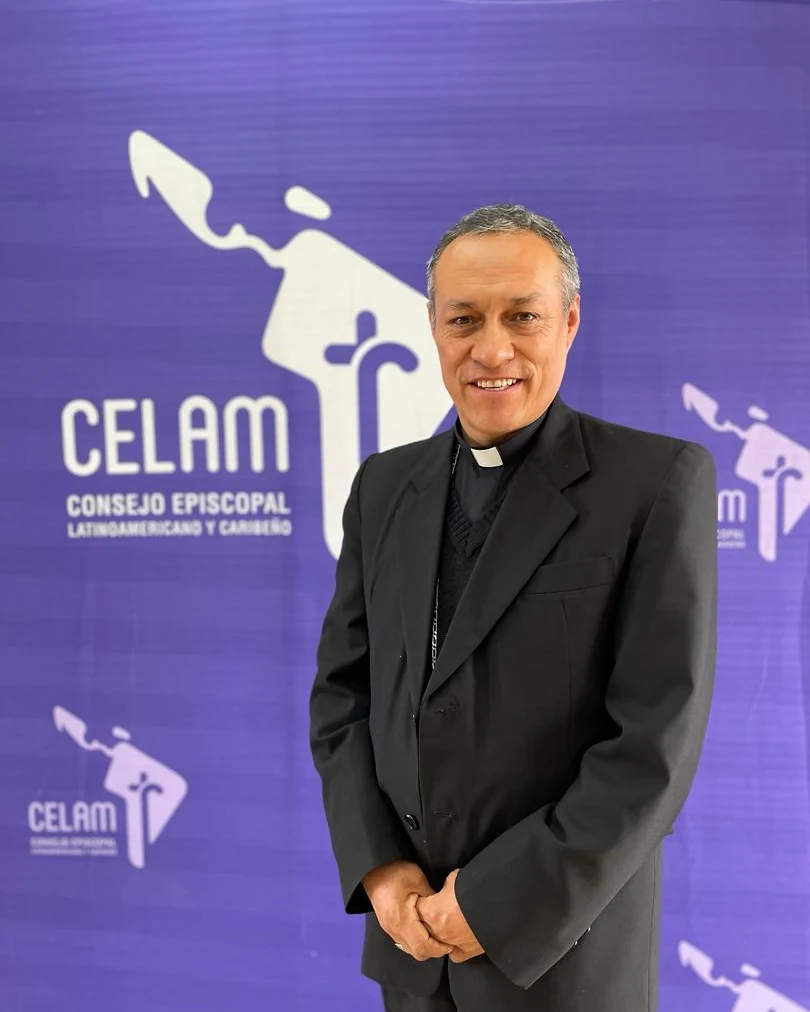
Lizardo Estrada Herrera, O.S.A.
Former student · Peru · CELAM · Vatican roles
A direct formation relationship that matured into episcopal and regional leadership, then crossed into Leo-era Vatican structures.
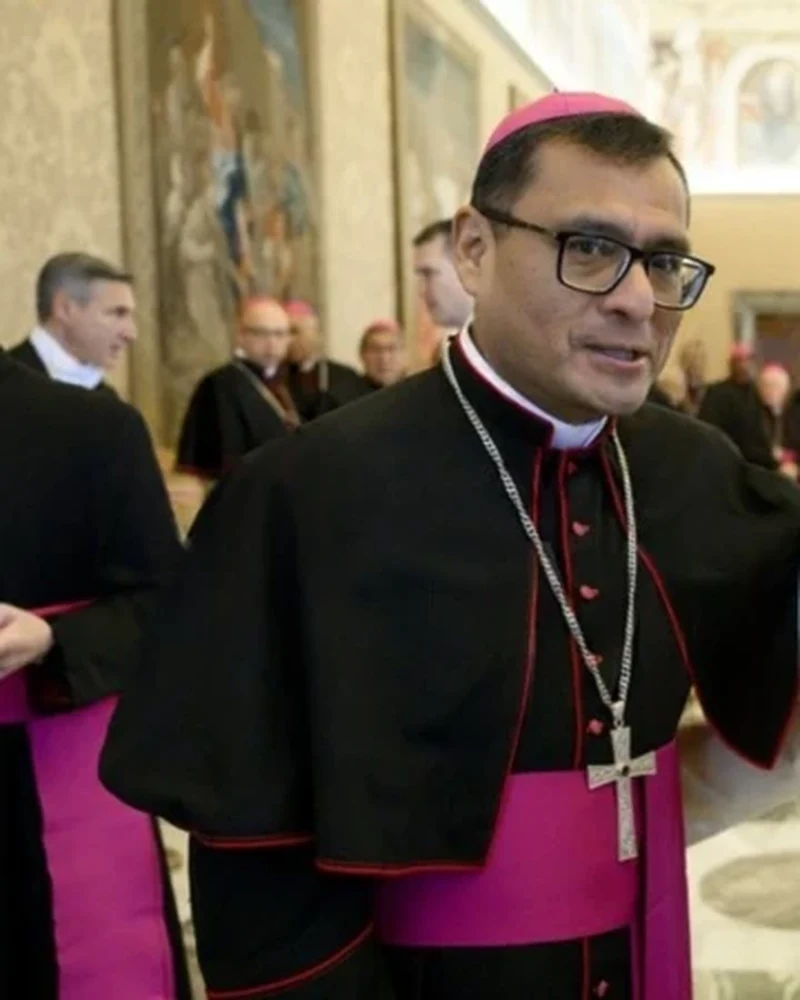
Edinson Farfán Córdova, O.S.A.
Trujillo formation environment · Bishop of Chiclayo
A Peruvian Augustinian leadership trajectory that eventually returned to Prevost’s former diocese.
Wilder Vásquez Saldaña, O.S.A.
Trujillo alumnus · Peruvian episcopate
One of multiple bishops publicly identified as emerging from the Trujillo formation environment associated with Prevost’s tenure.
John Lydon, O.S.A.
Trujillo colleague · OALA · university leadership
A long-term Peru collaborator whose later work connected formation, diocesan governance, Latin-American Augustinian leadership and Villanova.
Michael DiGregorio, O.S.A.
Assistant General · U.S. provincial leadership
Part of Prevost’s General Curia governing environment; later returned to major Augustinian leadership in the United States.
These trajectories predate the papacy. Leo arrived with relationships formed inside institutions built to train, select, deploy and govern people.
The platform Leo inherited
Francis did not simply promote Prevost. In 2023, he embedded a new generation of Curial leadership across one another’s governing bodies.
Prevost
Bishops
Evangelization
Doctrine
Eastern Churches
Culture & Education
Gugerotti
Eastern Churches
Bishops
Doctrine
Evangelization
Legislative Texts
Fernández
Doctrine
Bishops
Eastern Churches
Evangelization
Interreligious Dialogue
Structural read: Francis created a cross-linked governing cohort. Prevost entered the conclave already embedded inside that architecture.
Where the old network is crossing into papal government
So far, the crossover is selective. Leo has not filled the Vatican wholesale with Augustinians, but people from his older ecosystem are appearing in high-trust roles.
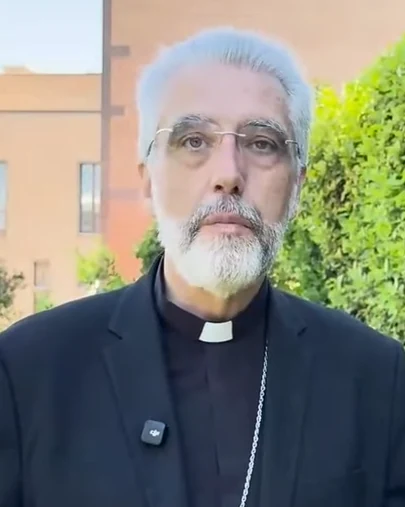
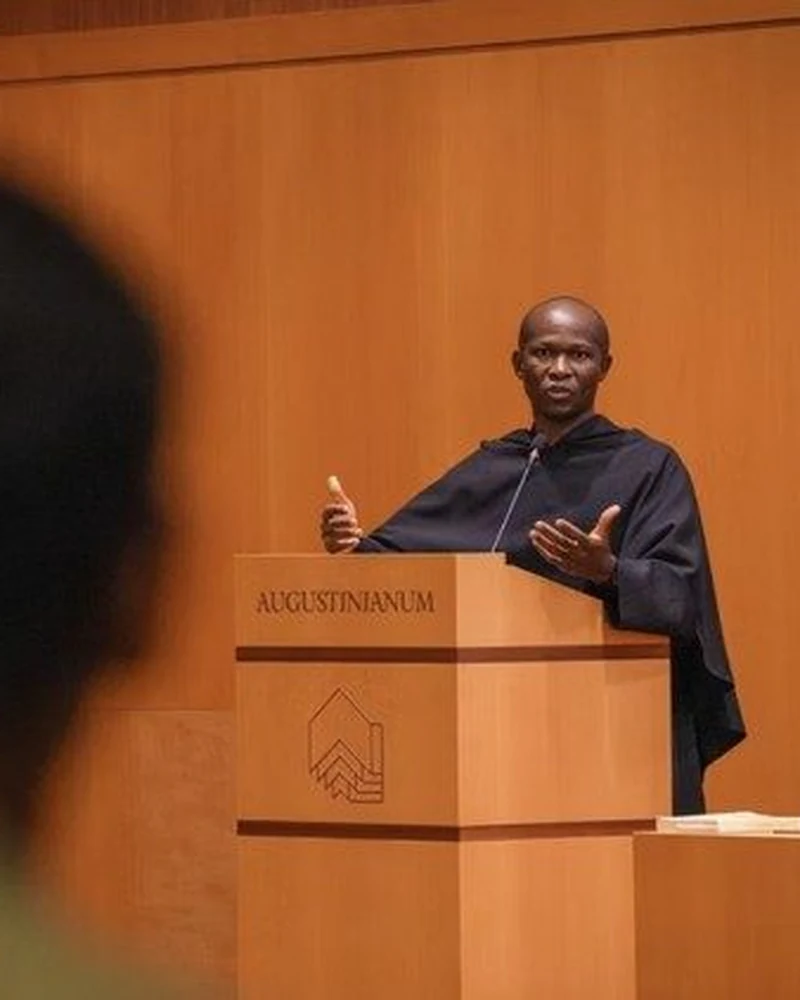
Luis Marín de San Martín, O.S.A.
Augustinian → Synod → papal charity
Appointed by Leo in March 2026 as Almoner of His Holiness and Prefect of the Dicastery for the Service of Charity.
Lizardo Estrada Herrera, O.S.A.
Prevost student → CELAM → Vatican
Appointed in March 2026 as a member of the Dicastery for Promoting Integral Human Development and later listed in the Vatican communications network.
Edward Daniang Daleng, O.S.A.
Augustinian General Curia → Papal Household
Appointed in November 2025 as Vice-Regent of the Prefecture of the Papal Household after serving as a General Councillor and Procurator General of the Order.
Leo is not replacing Francis’s machine with an Augustinian machine. The evidence is narrower: selective crossover from his long-term relational ecosystem into positions of trust, while major specialist systems remain in professional institutional hands.
A sovereign institution needs financial architecture
APSA
Administers much of the Holy See’s patrimony, property, treasury functions and institutional assets.
IOR
The Institute for the Works of Religion provides financial services to qualified Church-related clients and entities.
Economy / Audit / ASIF
Budget control, strategic oversight, audit and anti-money-laundering supervision are separated across distinct bodies.
The important post-Francis question is not “Does the Vatican have money?” It is how financial authority is distributed—and which mechanisms Leo keeps, loosens or rebuilds.
Keep the map disciplined
DOCUMENTED
- Prevost spent decades in formation and governance roles.
- Francis elevated him rapidly into Rome, the cardinalate and the bishop-selection apparatus.
- Prevost was institutionally cross-linked with other major Francis-era Curial figures.
- Multiple Trujillo alumni later entered episcopal leadership.
- Selected Augustinian-linked figures have entered Leo-era Vatican roles.
NOT ESTABLISHED
- That an “Augustinian faction” engineered Leo’s conclave victory.
- That every promotion of an Augustinian is personally directed by Leo.
- That Leo has displaced Francis’s governing network wholesale.
- That recurring institutional ties, by themselves, demonstrate covert coordination.
- That the historical network is static; many nodes have their own independent authority.
Leo XIV is best understood as a formation-and-network pope.
His career repeatedly placed him where institutions create their future leadership: seminaries, religious-order government, diocesan administration and finally the machinery that selects bishops. The papacy gives that same governing instinct a far larger field.
The signal to watch is not proximity alone. It is recurrence plus authority.
Primary / institutional records
This dossier separates documented institutional relationships from structural inference. These are anchor records, not an exhaustive bibliography.
- Holy See — Biography of Leo XIV
- Holy See Press Office — Edward Daniang Daleng appointment
- Holy See Press Office — Luis Marín de San Martín appointment
- Holy See Press Office — Lizardo Estrada / Integral Human Development
- Holy See Press Office — communications membership listing including Estrada
- Order of Saint Augustine — institutional archive
- Augustinian Province records — formation and historical material