The Verily
Wastewater Contract
Why the CDC monitors wastewater, what it is paying Verily to do, and which laboratory suppliers may benefit from the recurring work. The award is public; the supplier trail remains open.
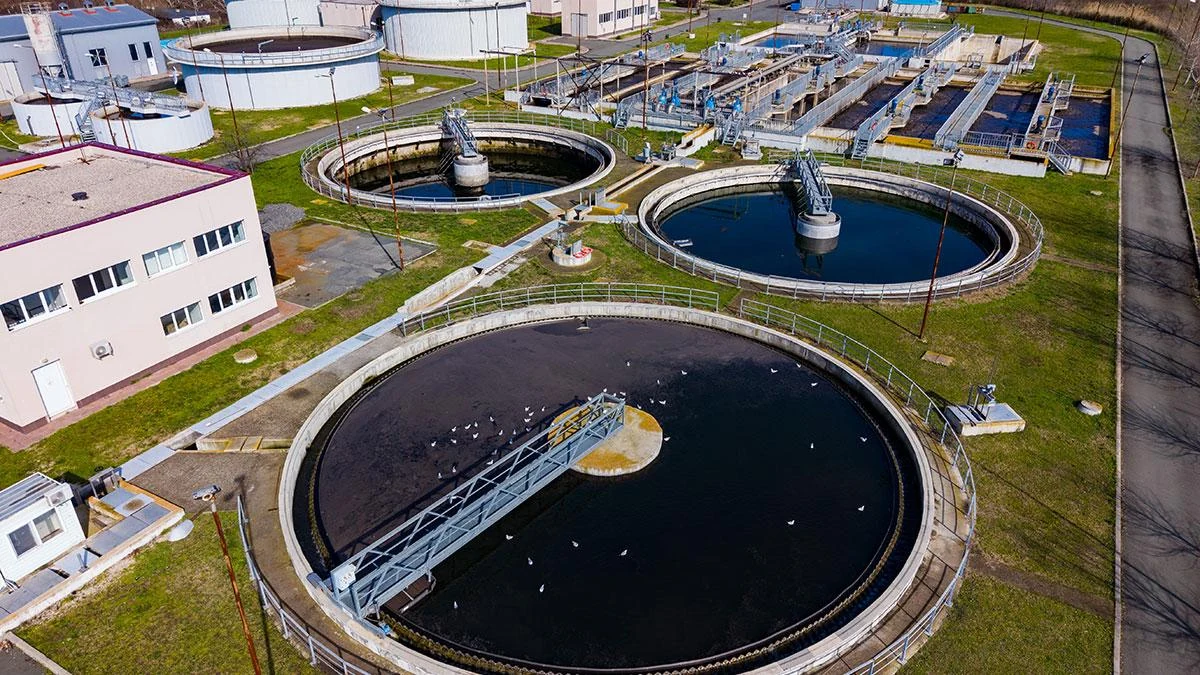
Why is the CDC testing wastewater?
When people are infected with certain viruses or other pathogens, traces of those organisms can end up in sewage. By testing samples from wastewater treatment facilities, public-health researchers can look for changes in what is circulating across a community—even when some infected people never seek medical care or take a clinical test.
Think of it as an early community-level signal, not a diagnosis. Wastewater results can help researchers track trends and give public-health officials another source of information when deciding what to investigate or communicate. They do not identify which household or person is infected, and a wastewater signal alone cannot tell us exactly how many people are sick.
The CDC is paying for the practical work required to keep that information flowing: collecting samples, getting them to laboratories, testing them consistently and sending usable results back for public-health analysis. See CDC's national wastewater surveillance information ↗
Why we're following the contract: A national monitoring network does not run on a one-time purchase. Repeated sampling means repeated demand for shipping, testing, reagents, instrument supplies and reporting. We want to know which companies are actually paid for those recurring requirements—not just which names appear in related research.
The award is settled. The supplier trail is not.
On September 28, 2026, the Centers for Disease Control and Prevention said it had competitively awarded its new wastewater testing contract to Verily. The agency also warned that approximately 200 surveillance sites would experience a temporary data gap while the transition was implemented. CDC's published notice ↗
The underlying contracting vehicle is reported as a five-year, single-award indefinite-delivery/indefinite-quantity (IDIQ) arrangement with a $145 million ceiling. Its first recorded delivery order is approximately $5.58 million. A ceiling authorizes potential orders; it does not mean the full amount has been spent, committed or earned.
Our central question: Which organizations and products turn this government surveillance requirement into recurring laboratory purchases—and which of those links can be documented rather than assumed?
The contract paper trail
Government contracts leave tracking numbers behind. Each one lets us check a different stage: what the CDC requested, who won the agreement, and what work has actually been ordered. The numbers are links to the available source records so readers can follow the evidence themselves.
| Stage | What happened | Why we care / source |
|---|---|---|
Original notice75D301-26-R-73475 | The CDC signaled a planned purchase before the full competition. | Shows the beginning of the process. Direct source link not yet verified. |
Solicitation75D301-26-R-73493 ↗ | The CDC asked companies to compete to provide wastewater surveillance services. | Reveals the kinds of testing, logistics and reporting the government wanted. View solicitation summary ↗ |
Prime contract75D30126D21689 | Verily received a reported five-year agreement with a $145 million maximum ceiling. | Identifies the company responsible for the overall contract. The ceiling is potential capacity, not money already spent. See linked award record ↗ |
Task Order 175D30126F00001 ↗ | The first recorded order, reported at $5,580,765.56 and awarded September 29, 2026. | Shows the initial ordered work rather than the contract's theoretical maximum. View order record ↗ |
In plain English: The $145 million figure is the spending limit for possible orders under the agreement; the approximately $5.58 million first order is the concrete starting point to examine. We will watch for additional orders, modifications, and supplier disclosures before assigning any of that spending to a laboratory-equipment company.
Public contract summaries show the initial order running through September 28, 2027. Future orders and options depend on agency decisions and funding; their exercise should not be assumed.
What the government is buying
The solicitation describes a service extending beyond laboratory testing: relationships with wastewater treatment facilities, sampling materials, sample shipment, digital-PCR testing, sequencing when required, quality controls and structured reporting to CDC. It contemplates a network scalable to hundreds of participating facilities and multiple pathogen targets.
Each stage can create repeated requirements: collection kits, transport materials, extraction reagents, PCR consumables, sequencing preparation, flow cells and data services. The existence of these categories does not prove any specific supplier has won CDC-related business.
Confirmed, adjacent, unverified
| Relationship | Evidence status | What we can say |
|---|---|---|
| CDC → Verily | Confirmed | CDC publicly names Verily as the new prime. |
| Verily → CDC Task Order 1 | Reported award | Federal contract listings identify the order and value. |
| Verily → specific CDC lab subcontractor | Not verified | No award-specific subcontractor is established in this dossier. |
| Verily-associated research → Thermo Fisher / Twist / Illumina | Adjacent research | Separately published wastewater research has identified these technologies; this does not prove use under the 2026 CDC award. |
| CDC award → QIAGEN / Bio-Rad / Illumina / Thermo Fisher / Danaher | Not verified | No contract-specific purchase or platform selection established. |
Evidence rule: A company appearing in a research paper, product brochure or historic partnership is not the same as that company receiving revenue under this award. We do not connect the arrows until the documents do.
What the published methods reveal
Published wastewater sequencing research involving Verily-affiliated investigators describes named instruments and consumables. This provides a technical lead, but does not establish that these products are purchased under the September 2026 CDC award. The contracted production workflow and its subcontractors remain to be verified.
| Supplier | Research workflow technology | 2026 CDC award status |
|---|---|---|
| Thermo Fisher (TMO) | KingFisher extraction and MagMAX nucleic-acid isolation kits | Not contract-verified |
| Twist Bioscience (TWST) | Sequencing library preparation and viral enrichment panels | Not contract-verified |
| Illumina (ILMN) | NovaSeq X Plus sequencing platform | Not contract-verified |
| Ceres Nanosciences | Nanotrap sample-concentration materials | Not contract-verified |
| QIAGEN (QGEN) / Bio-Rad (BIO) | Digital-PCR platforms remain investigation candidates; not identified in this sequencing workflow | Neither selected platform verified |
Two channels, not one: CDC-supported surveillance testing under the new Verily contract must be distinguished from the WastewaterSCAN research collaboration involving Stanford, Emory and Verily. A supplier named in one channel is not automatically a supplier to the other.
Next documents to obtain: Task Order 1 technical requirements, subcontractor disclosures, validated digital-PCR instruments, sequencing protocols and recurring reagent purchases. Those records would turn adjacent research leads into a verifiable procurement chain.
Where the recurring tollbooths may sit
| Layer | Companies to investigate | Required proof |
|---|---|---|
| Digital PCR | QIAGEN (QGEN), Bio-Rad (BIO), other vendors | Named instrument, assay validation or purchase order |
| Extraction | Thermo Fisher (TMO), QIAGEN, Danaher (DHR) businesses | Lab workflow, extraction kit or equipment records |
| Sequencing | Illumina (ILMN), Thermo Fisher, others | Production platform and consumable specification |
| Library preparation | Twist Bioscience (TWST), other suppliers | Validated enrichment or library-prep protocol under award |
| Transport and reporting | Undetermined | Named service contracts, volumes and renewal terms |
Investment lens: prioritize documented sample throughput, consumables purchased per run, qualification and switching costs, contract duration, and actual supplier concentration. Avoid treating the $145 million ceiling as a direct addressable revenue figure for any instrument vendor.
What we're still tracing
- Which laboratories are performing the contract's production testing and sequencing?
- Which digital-PCR platforms, assays and extraction systems are approved for this workflow?
- Which sequencing methods are used operationally, and for which pathogen targets?
- What portion of Task Order 1 is allocated to laboratory testing versus collection, shipping, implementation and data reporting?
- What task-order modifications, option exercises and future awards will disclose sustained volumes?
- Does ambient sample stabilization alter shipping costs or vendor selection over time?
Document trail
CDC procurement issued
The CDC solicited scalable wastewater surveillance services under 75D301-26-R-73493, including digital-PCR testing, sequencing, collection logistics and reporting.
Solicitation summary ↗Verily selected
CDC states it competitively awarded the new wastewater testing contract to Verily Health, Inc.
CDC award notice ↗First delivery order
Delivery order 75D30126F00001 was awarded with a reported value of $5,580,765.56 and an end date of September 28, 2027.
Federal contract record ↗Transition disclosed
CDC warned that roughly 200 sites would experience a brief reporting gap while sampling, testing and reporting restart.
CDC surveillance dashboard ↗Pending supplier confirmation
This dossier will be revised when a new procurement record, technical disclosure or primary document materially changes the supplier chain.